Leave Your Message
Engineered for immediate deployment across German chemical hubs like Ludwigshafen, Frankfurt-Höchst, and North Rhine-Westphalia, our certified emergency stations ensure swift contaminant flushing within the critical first 10 seconds.
Germany's strict occupational health frameworks (DGUV Regel 109-001, TRGS 526, and DIN EN 15154) create a dual-tier safety requirement where localized bottle eye wash units complement stationary plumbed systems.
In German manufacturing standards, DIN EN 15154 Part 4 governs personal eye wash bottles (non-plumbed). Immediate neutralization of corrosive chemical splashes within 2–5 seconds prevents irreversible ocular trauma before workers reach plumbed emergency showers.
German Technical Rules for Hazardous Substances mandate that any laboratory, battery assembly, or paint mixing shop handling caustic alkalis or acids maintain readily accessible, sterile eye rinse bottles right at the workstation.
With Germany accelerating EV gigafactories (e.g., in Brandenburg, Saxony, and Baden-Württemberg) and renewable green hydrogen facilities, portable water bottle eye wash stations protect mobile maintenance teams working off-grid.
At WELKEN, we believe all workers have the right to return home safely. Our journey began in 1998, rooted in a simple, yet profound mission: to manufacture safety equipment that never fails when it matters most.
Over two decades, we grow from a normal factory into a National High-Tech Enterprise. In 2007, we took our first steps into the global market, bringing Chinese manufacturing precision to the world. Today, WELKEN is more than just a brand—it is a trusted shield for personnel in over 70 countries, protecting lives from the oil fields of the Middle East to the rugged mines of South America, and across the stringent industrial landscape of Germany.
German engineering standards demand uncompromising precision, chemical resistance, and ergonomic swiftness. Our continuous investment in certified tooling and automation enables us to fulfill large-scale OEM orders for German safety distributors with guaranteed batch consistency.
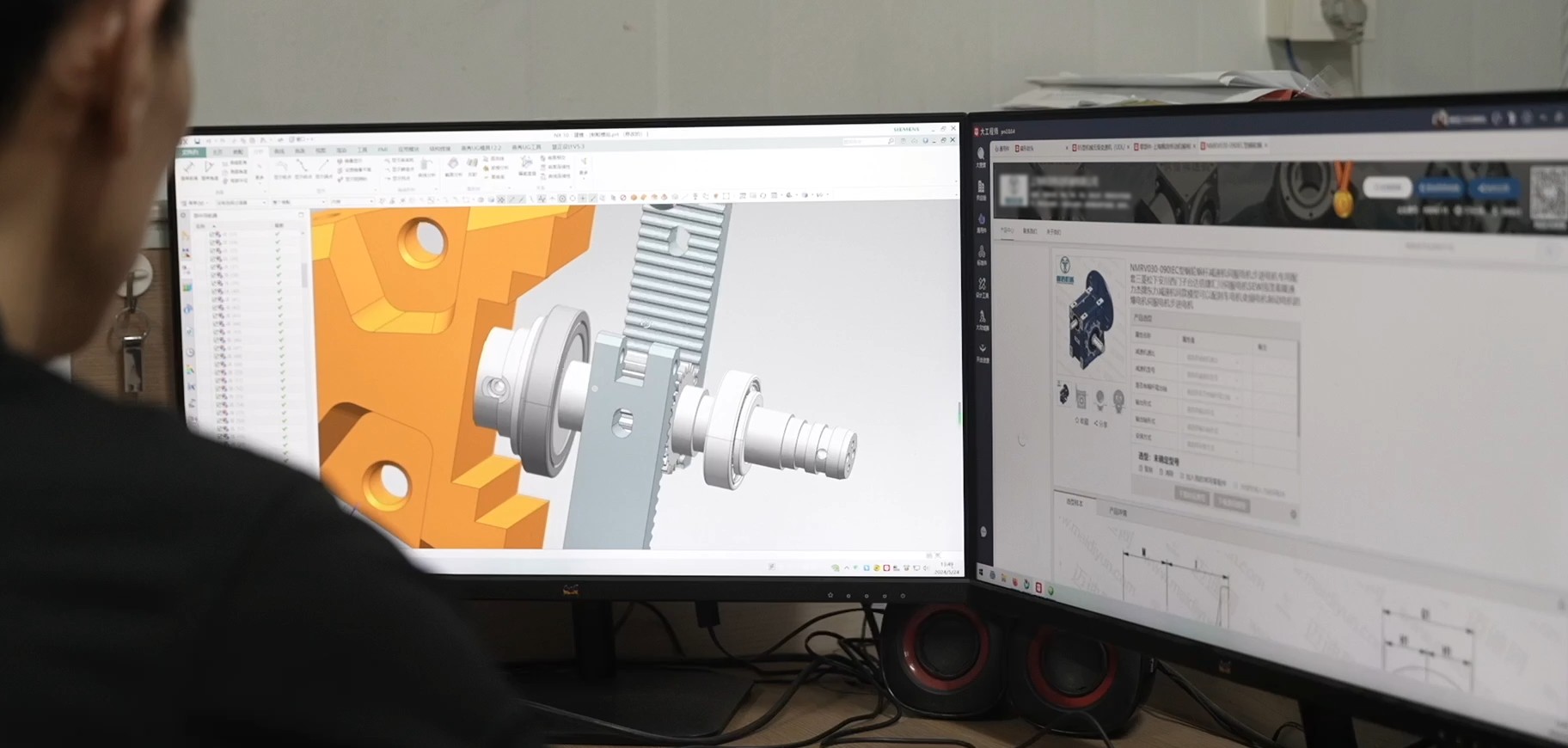
We don’t just manufacture products, we create peace of mind. Our vast expertise lies in a comprehensive unified system where creative design meets industrial compliance.
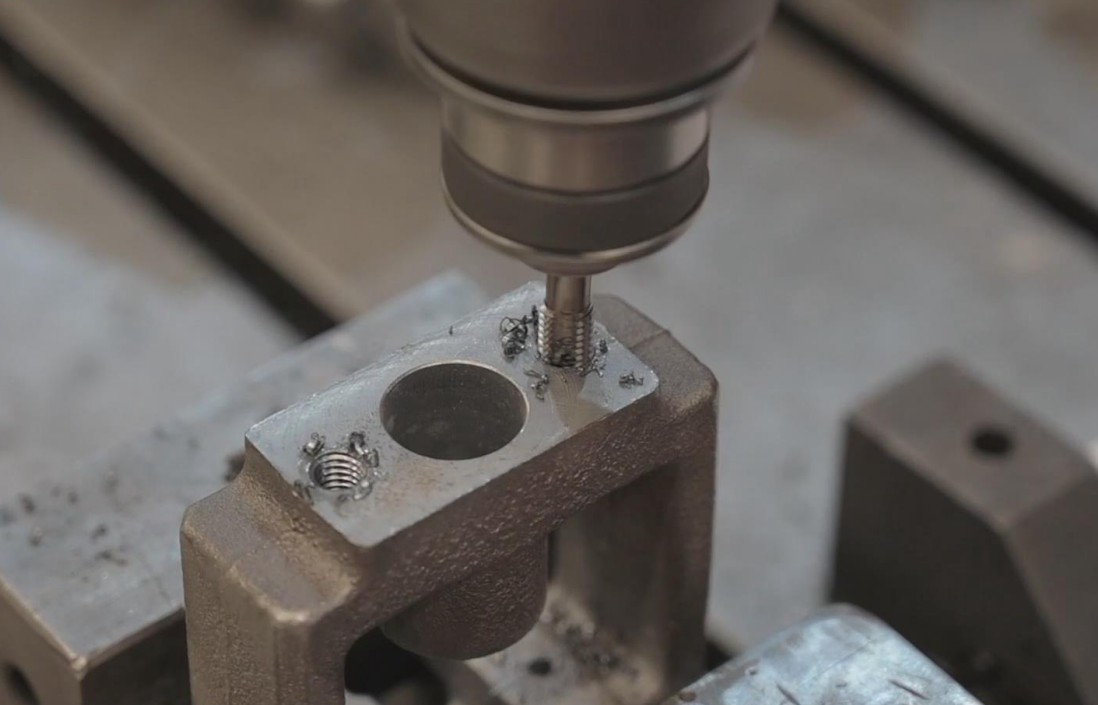
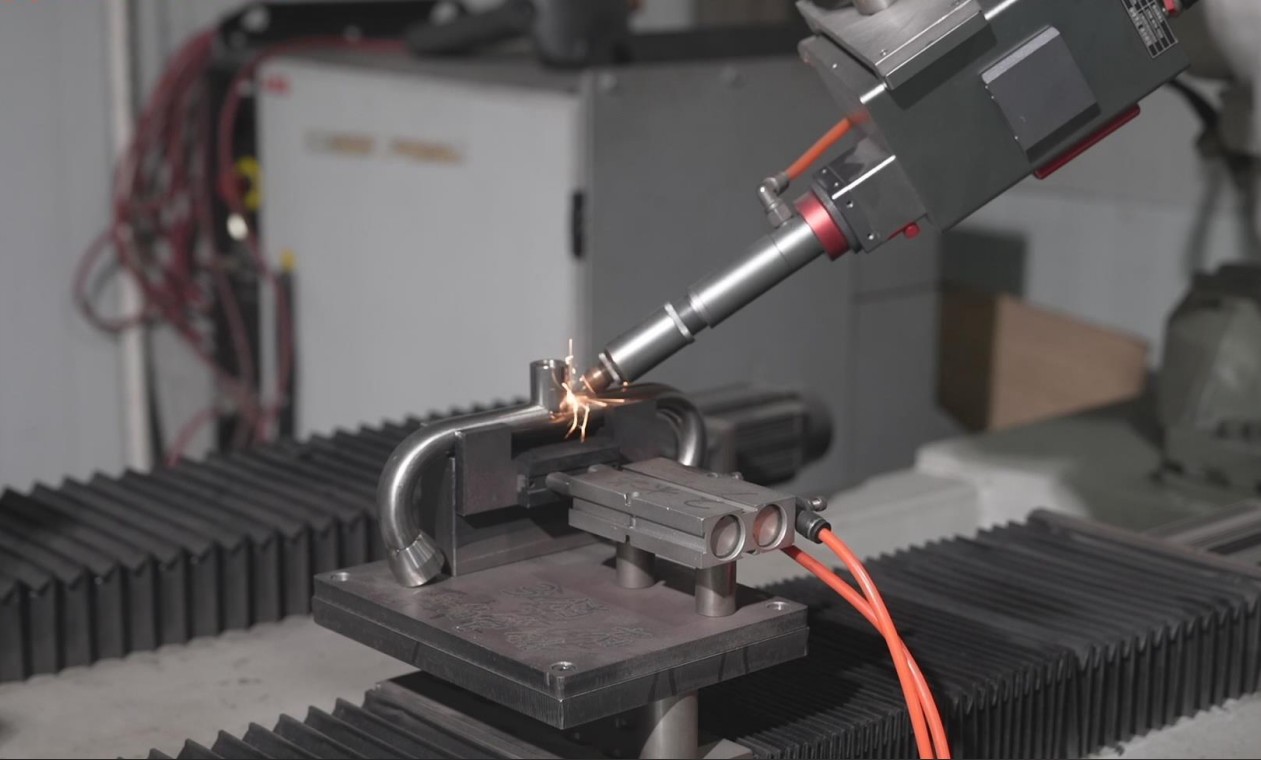
From our specialized mould-making and injection moulding workshops to our advanced CNC machining centers, we are controlling every millimeter of the process. This integration allows us to transform a design into a life-saving equipment with precision.
Our technical team is not just experienced; they also bridge the gap between complex safety theories and practical, site-specific applications required by German HSE auditors and European chemical safety directives.
Quality is not a claim, it is a proven fact. Each shower and eye wash station is subjected to pressure, flow, and switch testing to guarantee that it surpasses both ANSI Z358.1-2014 and DIN EN 15154 specifications before dispatch.
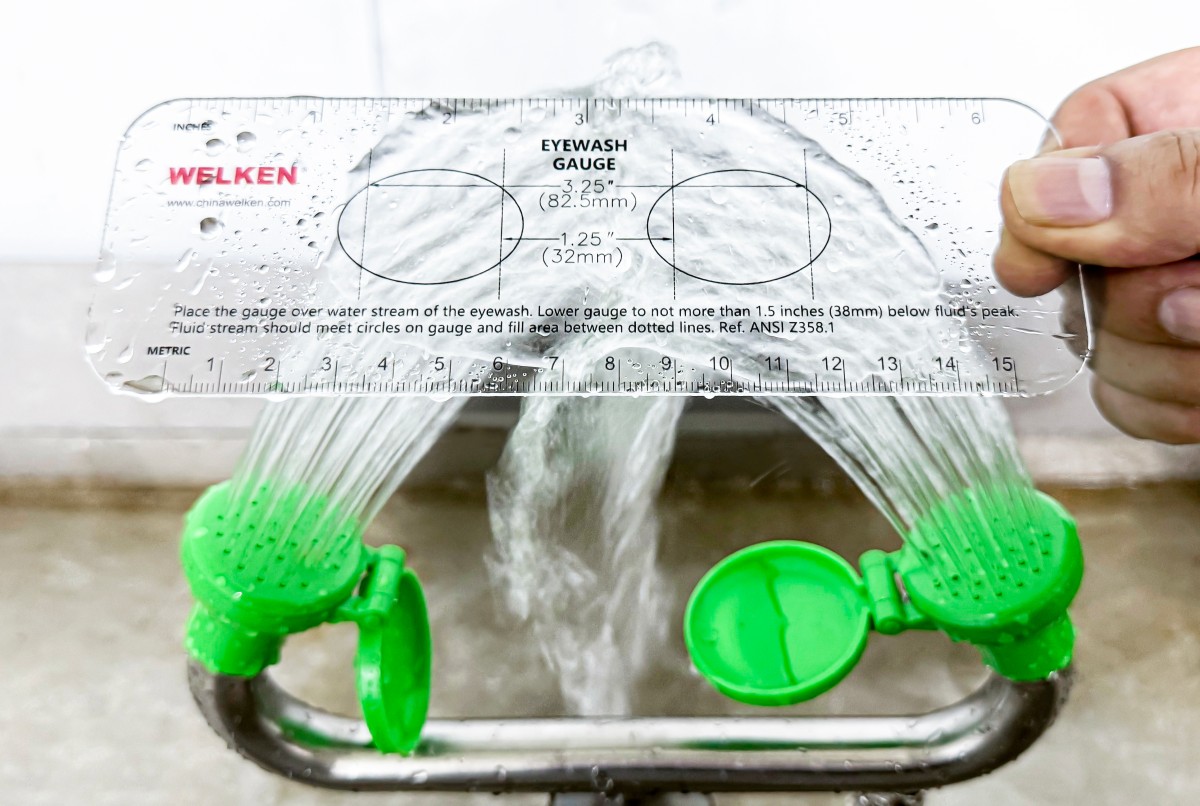
In high-risk chemical environments across German automotive and pharmaceutical plants, eye wash bottles must be intuitive, tamper-evident, and immediately operative with zero fumbling:
| Parameter / Feature | Stationary Plumbed Eye Wash | Portable Water Bottle Eye Wash | Combined Eye Wash & Shower |
|---|---|---|---|
| Applicable Norms | DIN EN 15154-2 / ANSI Z358.1 | DIN EN 15154-4 / TRGS 526 | DIN EN 15154-1 & 2 / ANSI Z358.1 |
| Response Time Target | Within 10 seconds of hazard zone | Immediate (0 to 3 seconds at bench) | Within 10 seconds of high hazard |
| Flushing Duration | Minimum 15 minutes continuous flow | Immediate pre-rinse (approx. 3-5 min/bottle) | Minimum 15 minutes full deluge |
| Flow Rate Standard | ≥ 1.5 L/min (0.4 gpm) at 2.4 bar | Controlled manual / gravity squeeze stream | ≥ 75.7 L/min (20 gpm) deluge shower |
| Typical German Application | BASF Chemical plants, Paint shops | Mobile service vans, CNC workstations | Chemical loading docks, Battery lines |
Since 2014, WELKEN has been a fixture at the world's leading Occupational Safety exhibitions in A+A Düsseldorf. Our journey doesn't stop in Germany; we actively engage with industry leaders at major occupational health and safety exhibitions across the USA, Mexico, Singapore, Russia, Kazakhstan, Turkey and other countries. We listen to the unique challenges of different markets, allowing us to provide diverse safety solutions rather than just off-the-shelf products.
We provide full customized tooling, laser branding, bilingual German/English documentation, and DGUV-compliant packaging for European safety distributors.
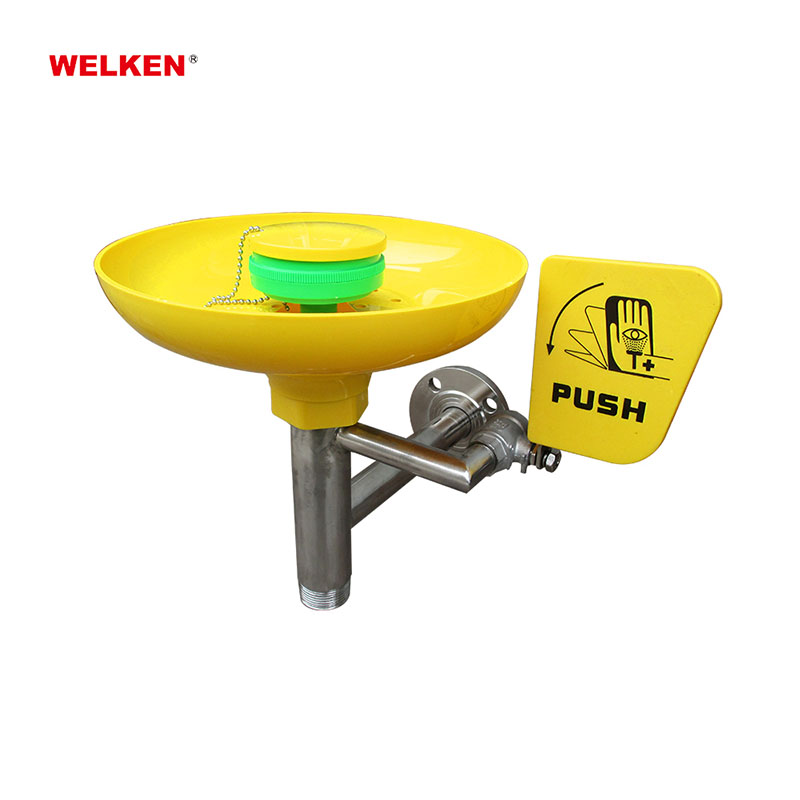
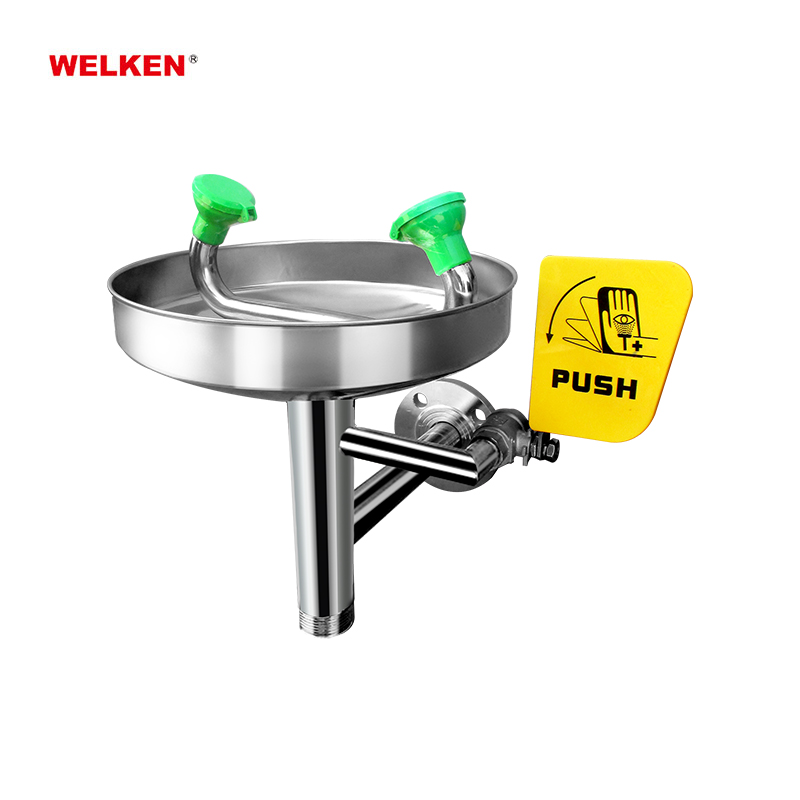
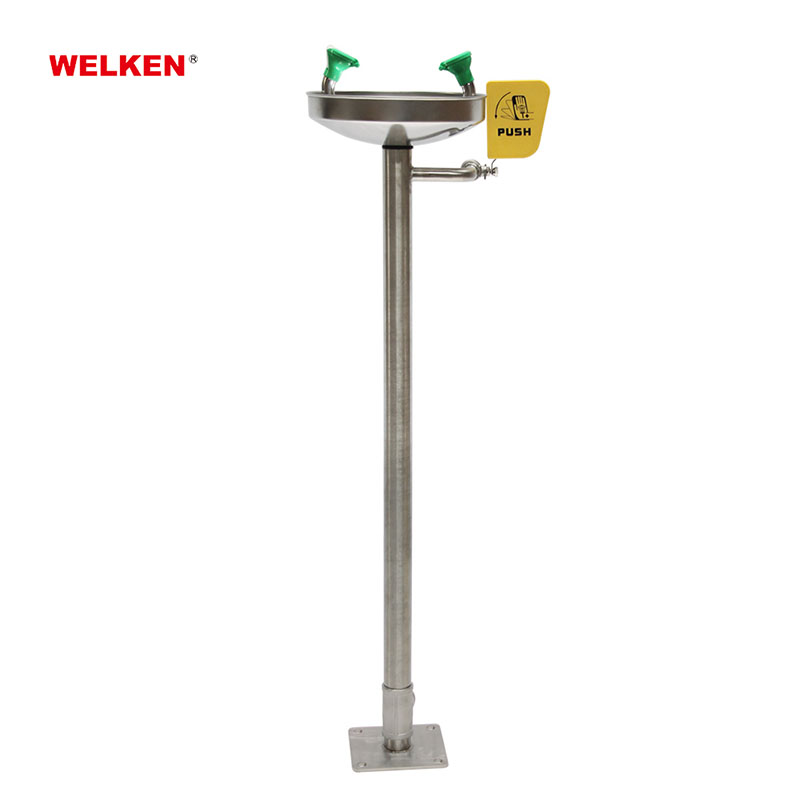
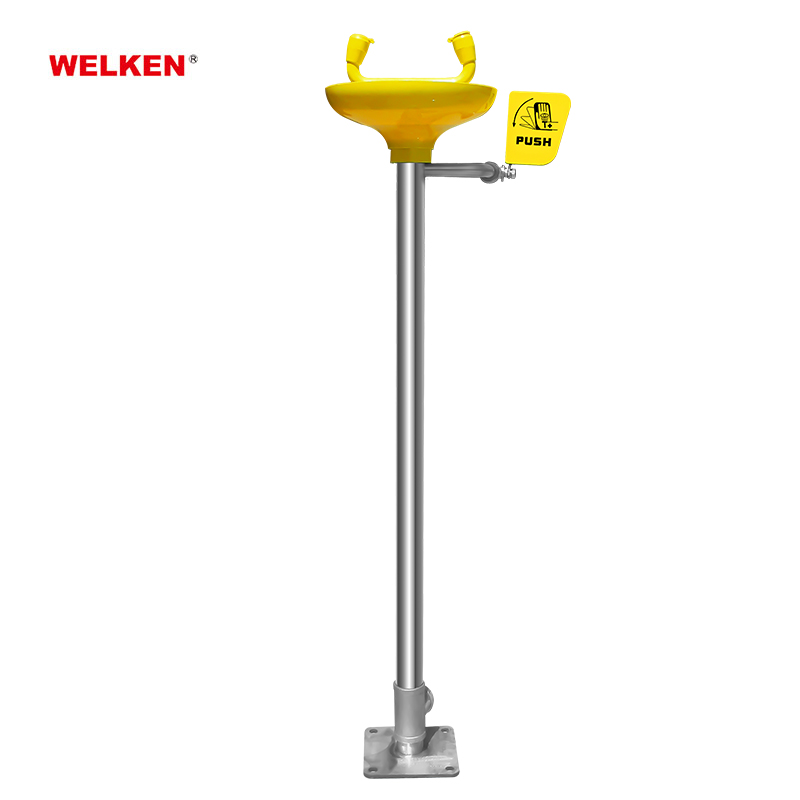
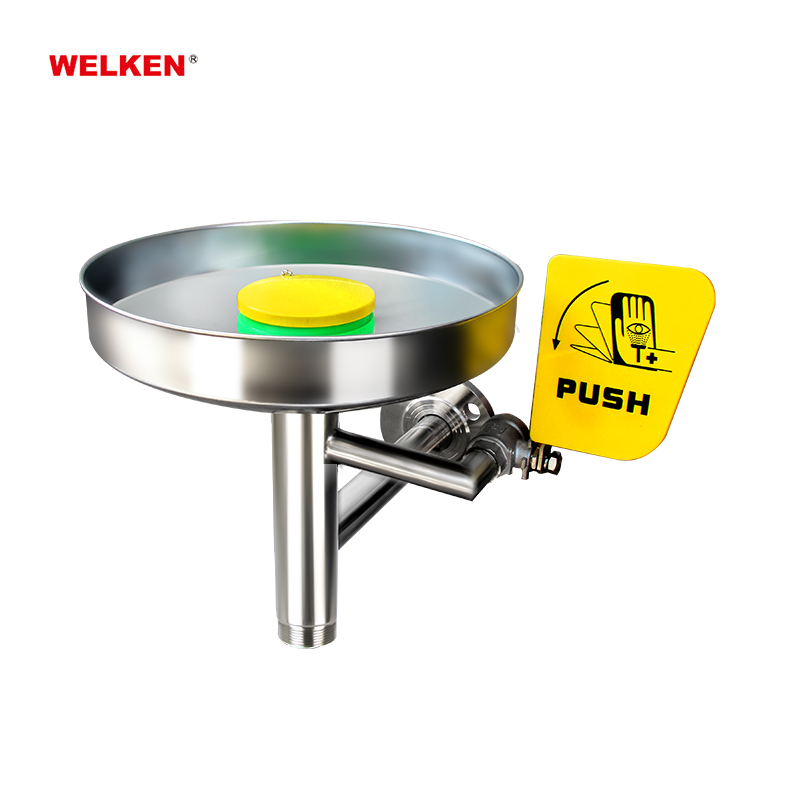
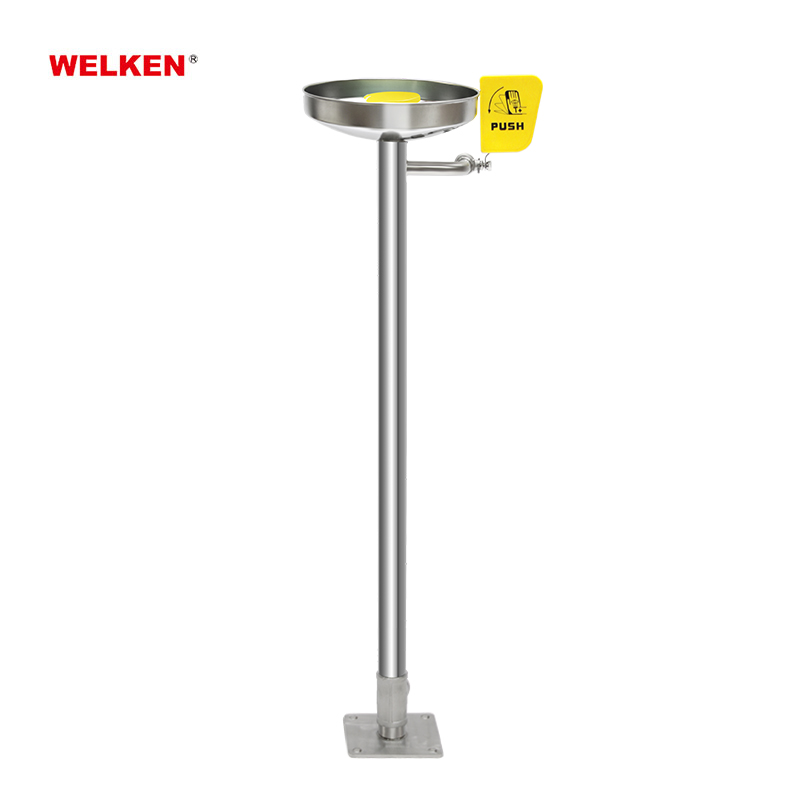
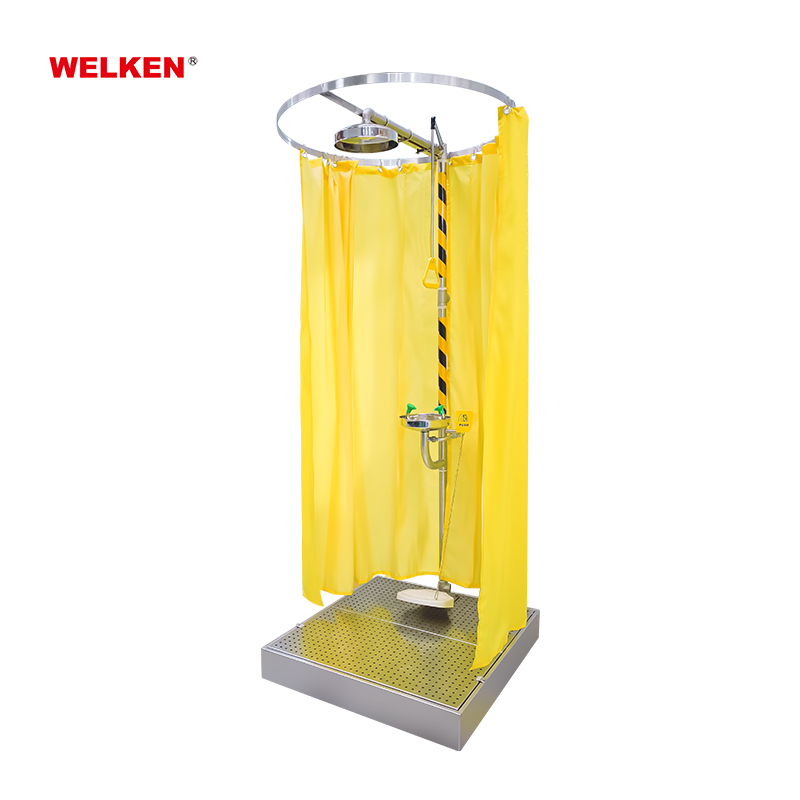
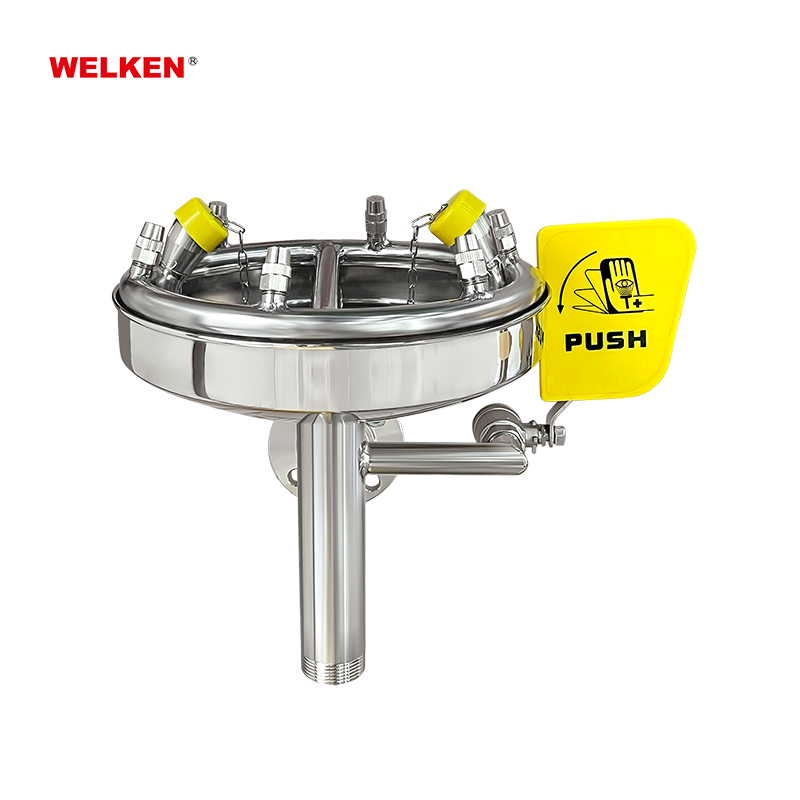
Explore our complete lineup of wall-mounted, pedestal, hybrid, and combination deluge eye wash stations engineered to deliver reliable decontamination in the toughest German industrial environments.
Key considerations regarding compliance, logistics, liquid solutions, and dual installation protocols under European workplace safety directives.
According to DIN EN 15154-4 and TRGS 526, personal eye wash bottles do not entirely replace plumbed stations where continuous 15-minute flushing is required for severe hazardous chemical exposure. However, they are officially mandated for immediate first-aid intervention (the first 2–10 seconds) while moving to a plumbed fixture, and serve as the primary solution in off-grid maintenance or field work.
Standard units utilize sterile 0.9% sodium chloride (saline solution) matching natural ocular fluid salinity. For acid and strong alkali chemical hazards common in battery and plating facilities, sterile phosphate buffering solutions (pH-neutralizing) are widely specified across European safety protocols.
Under DGUV Information 213-085 and DIN EN standards, plumbed emergency eye washes must be activated and inspected weekly to flush stagnant water and verify water delivery. Sealed eye wash bottles must be checked regularly for seal integrity and expiration dates (typically 2 to 3 years from manufacture date).
Standard containerized OEM shipments are dispatched via key European maritime routes directly to the ports of Hamburg, Bremen, or Rotterdam, with direct intermodal rail options via the New Silk Road (Chongqing/Chengdu to Duisburg/Hamburg) for accelerated delivery within 14–18 days.