Leave Your Message
Navigating Spanish Workplace Safety Regulations (INSST & RD 486/1997) and Rapid Industrial Expansion
Spain stands as one of the European Union's most vibrant industrial powerhouses, characterized by world-class automotive manufacturing plants, massive petrochemical complexes, thriving pharmaceutical corridors, and an extensive agricultural export economy. In this rigorous industrial ecosystem, occupational safety is not merely an operational checkbox—it is a legal mandate governed strictly by the Spanish Law on Prevention of Occupational Risks (Ley 31/1995 de Prevención de Riesgos Laborales) and Real Decreto 486/1997 regarding minimum workplace health and safety requirements. Within these legal frameworks, employers are required to provide immediate ocular flushing solutions wherever workers are exposed to chemical splashes, airborne corrosive particulates, thermal hazards, or hazardous solvents.
While permanent plumbed combination emergency showers and eye wash stations form the backbone of centralized chemical facilities, modern industrial facilities throughout Catalonia, the Basque Country, the Valencian Community, Andalusia, and Madrid increasingly recognize the non-negotiable value of portable and wall-mounted Bottle Eye Wash (Lavaojos en Botella) units. Plumbed emergency stations are often located up to 10 seconds away from the hazard zone. However, in incidents involving concentrated acids, caustic alkalis (such as sodium hydroxide used in cleaning-in-place systems), or aggressive organic solvents, irreversible corneal necrosis can occur within the first 3 to 5 seconds.
Emergency eye wash bottles provide immediate, zero-latency ocular irrigation directly at the worker's workstation, battery charging bay, maintenance trolley, or mobile service vehicle. As a dedicated OEM bottle eye wash manufacturer, our advanced production capabilities empower Spanish safety equipment distributors and industrial hygiene contractors to supply certified, highly ergonomic solutions engineered specifically for these demanding regional environments:
In Spain, safety inspectors guided by the National Institute for Safety and Health at Work (Instituto Nacional de Seguridad y Salud en el Trabajo - INSST) enforce strict European norms. Specifically, non-networked personal eye wash units must adhere to UNE-EN 15154-4. This standard dictates that eye wash bottles must be filled with sterile fluid (such as sterile 0.9% sodium chloride saline or sterile purified water), feature an anatomically contoured ocular cup that keeps the eyelid gently open without exerting harmful pressure, display unambiguous multilingual pictogram instructions complying with ISO 7010, and include tamper-evident safety seals that guarantee sterility until deployment.
Our OEM manufacturing process incorporates medical-grade automated blow-fill-seal (BFS) technology, virgin high-density polyethylene (HDPE) polymer extrusion, and laser-etched lot traceability, ensuring that Spanish safety importers receive products that exceed European inspection protocols with zero quality defects.
Craftsmanship & Technology: The Precision Behind the Protection
Protecting Every Mission, Securing Every Industry — From Tarragona to Vigo






OEM Customization, R&D Engineering, and Quality Assurance for European Supply Chains
As an experienced OEM eye wash bottle manufacturer, we recognize that supplying the Spanish and broader European market requires far more than generic blow-molded bottles. Modern European industrial procurement demands advanced ergonomics, material stability, chemical resistance, and intelligent compliance monitoring. Our factory integrates advanced automated manufacturing and precision tooling to deliver custom-branded solutions directly for safety distributors, PPE brand holders, and industrial suppliers across Spain.
The human eye reflexively clamps shut upon contact with corrosive chemicals. Standard flushes often fail because the casualty struggles to open their eyelids. Our OEM bottle eye wash stations feature an anatomically contoured, flexible soft-rubber or medical-grade TPE ocular cup. The cup is designed to gently cradle the eye socket, with dual miniature rim vents that effortlessly keep the upper and lower eyelids retracted. Furthermore, the central perforation delivers an ultra-soft, aerated micro-stream of sterile fluid directly onto the cornea without generating traumatic hydrostatic pressure, ensuring gentle, prolonged, and thorough irrigation.
Depending on the customer's risk profile in Spanish facilities, we engineer and fill eye wash bottles with two specialized formulations:
Spain's climate presents distinct environmental extremes: northern coastal regions face high humidity and salt-spray corrosion, while southern Andalusia and central Castilla experience summer temperatures exceeding 42°C. We supply wall-mounted eye wash stations encased in heavy-duty, impact-resistant ABS and poly-carbonate enclosures. These stations feature tight neoprene seals (IP65 dust/moisture rating), integrated shatter-proof acrylic mirrors to assist self-administration, and high-visibility luminescence that glows in sudden blackout conditions. For high-temperature processing zones, optional thermal insulation liners ensure that the eyewash fluid remains below the EN-recommended 38°C ceiling.
We provide end-to-end private labeling for Spanish safety distributors:
Global leading safety product and solution provider dedicated to research and development.

Technical Answers for Occupational Risk Prevention Officers (Técnicos de PRL) and Importers
Under our automated medical-grade Blow-Fill-Seal (BFS) cleanroom production, unopened sterile sodium chloride 0.9% and phosphate buffer neutralizer solutions feature an extended shelf life of 3 to 3.5 years when stored in ambient conditions below 35°C.
Under UNE-EN 15154-1/2 and INSST Technical Notes (NTP), bottle eye wash units (Part 4) are primarily designated as supplementary first-line decontamination devices for immediate reach (<3 seconds) or in mobile work vehicles. Permanent high-hazard zones still require full 15-minute continuous flow plumbed units.
We accommodate flexible MOQs starting at 500 units for customized bilingual silk-screen printed labels and private label packaging boxes. For proprietary molded bottle designs or station molds, custom tooling programs can be initiated with our in-house 3D CAD team.
Ocean freight from our plant near Tianjin Port to the Port of Valencia, Port of Barcelona, Port of Bilbao, or Port of Algeciras typically requires 28 to 35 transit days. Full documentation including CE declarations, Certificates of Analysis (COA), and HS codes is provided.
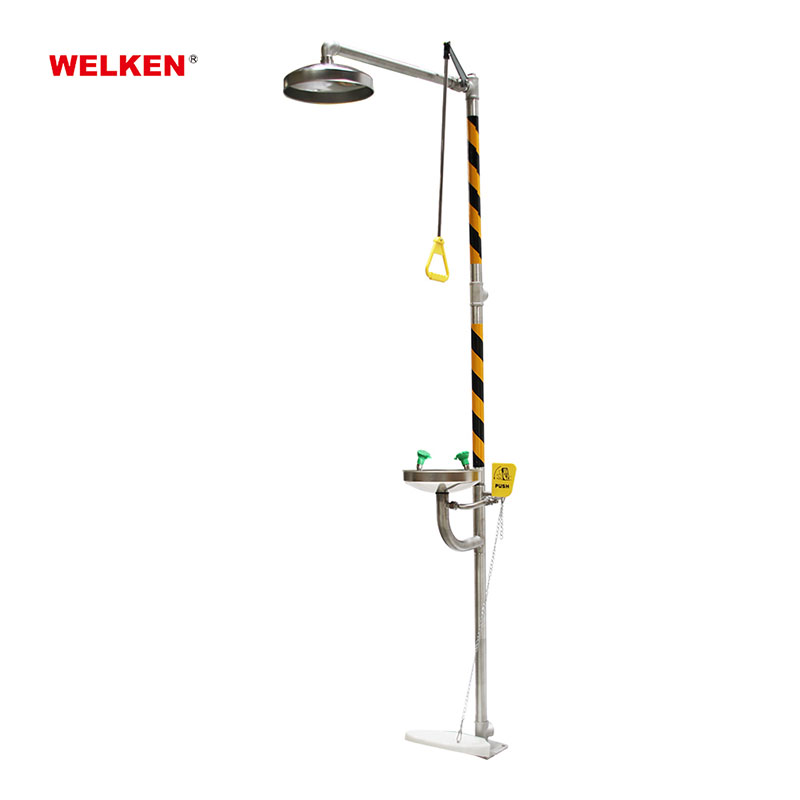
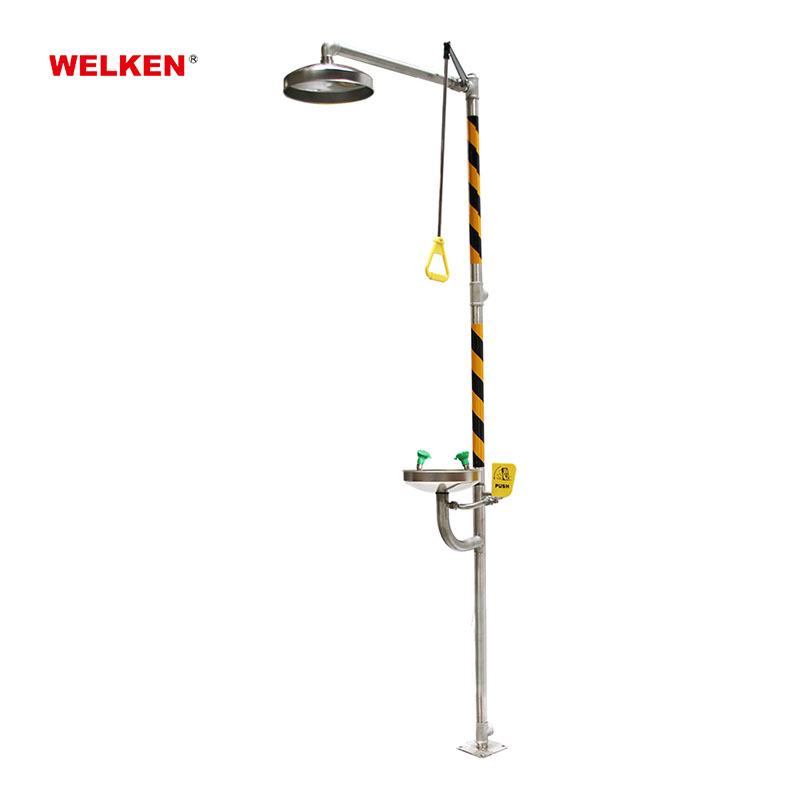
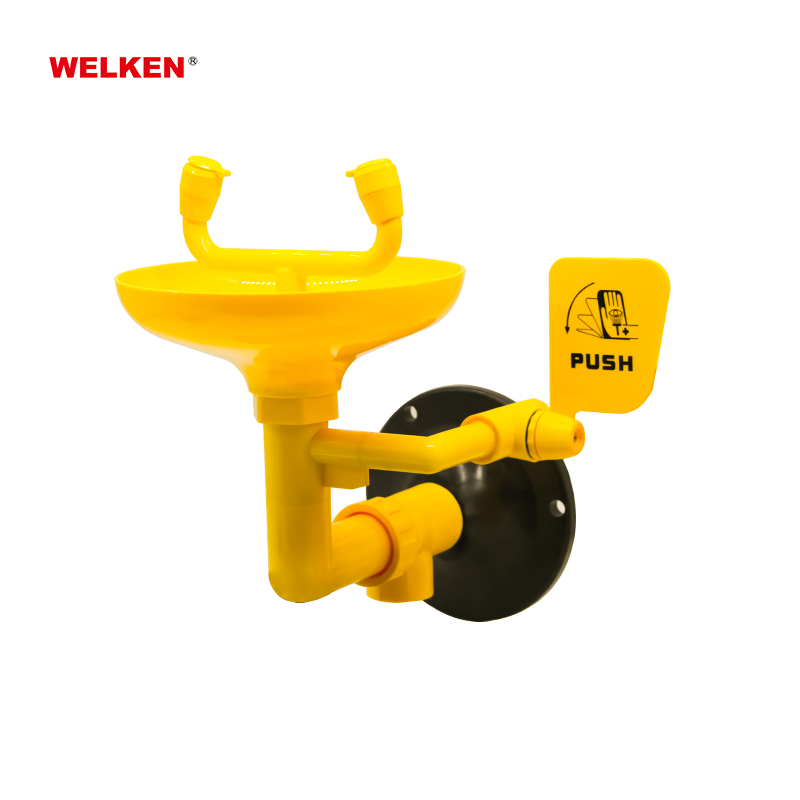
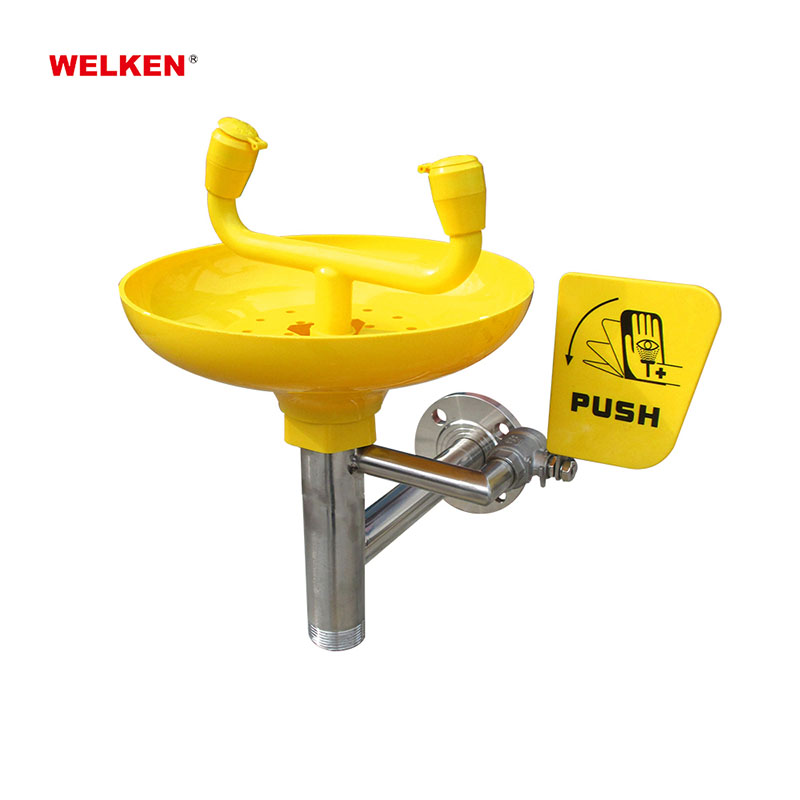
Certified Emergency Flushing Stations, Wall Mounted Bowls & Pedestal Units for Iberian Industry