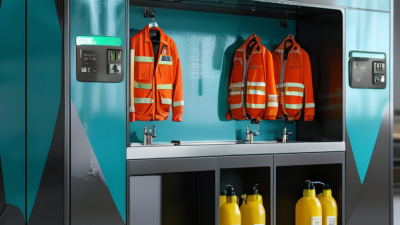
Picking out emergency eyewash equipment for global facilities isn’t just about comparing prices or glancing at product photos—there’s a lot more to consider. You really need to think about the specific hazards at your workplace, how the equipment will be installed, what kind of ongoing maintenance it might need, and what safety standards are expected locally. For example, a lab might call for a plumbed eyewash station, while somewhere remote like a warehouse might be better off with a sturdy, self-contained unit. The key is starting with a realistic assessment of the actual risks involved.
Most experienced safety managers will look into how well the eyewash flushes, check the water temperature, how fast it activates, and the design of the bowl. They’ll also make sure there’s enough space to access it easily. On top of that, they'll review what materials are used, how resistant it is to corrosion, drainage features, availability of spare parts, and support from the supplier. Sometimes, certifications like ANSI/ISEA Z358.1 or EN 15154 can help simplify the technical evaluation, but don’t just take those marks at face value—they should be verified because they don’t automatically mean the product is suitable for every country or workplace.
Details really do matter here. If you’re buying, ask for test records, clear installation instructions, maintenance schedules, and straightforward warranty info. A good supplier will also be able to tell you how their equipment holds up under local water pressure, climate conditions, and daily use. It’s also super helpful if they offer practical training—showing your team how to inspect the equipment regularly and perform weekly activation checks. Little problems, if left unchecked, can turn into big issues—like blocked access, frozen pipes, bad drainage, or missing spare parts—so proactive measures are a must.
Honestly, no selection process is foolproof. Sometimes product brochures leave out important limitations or specifics, so don’t hesitate to ask questions about anything that seems unclear. It’s a good idea to bring in qualified safety pros for help before making a final decision. Doing your homework means you’ll more likely pick eyewash stations that are accessible, reliable, and easy to maintain when they’re needed most. Remember, safety isn’t just about having the right gear—it’s about designing and installing it properly, performing regular tests, and fostering a workplace culture that treats emergency readiness as a daily priority.
Define the Workplace Hazards That Require Emergency Eyewash Equipment
How to Choose Emergency Eyewash Equipment for Global Buyers?
Define the Workplace Hazards That Require Emergency Eyewash Equipment
Emergency eyewash selection begins with a hazard survey, not a product catalogue. Walk through laboratories, production lines, maintenance rooms, and loading areas. Identify acids, alkalis, solvents, disinfectants, metalworking fluids, and contaminated dust. Check every Safety Data Sheet for eye-contact warnings. CDC/NIOSH reports that about 2,000 U.S. workers suffer job-related eye injuries daily. The risk is broader than chemical burns.
Map each hazard to its exposure path. A splash may reach the face within seconds. Fine dust can lodge beneath eyelids. Pressurized hoses may create unexpected spray. BLS recorded 2.6 million nonfatal workplace injury and illness cases in private industry during 2023. That figure is not eye-specific, but it shows why routine risk reviews matter. A quiet workstation can still hide a serious exposure.
Install eyewash equipment where workers can reach it quickly, without doors, stairs, or stored materials blocking access. ANSI/ISEA Z358.1 provides widely used performance guidance, while local rules may differ. Evaluate water temperature, flow, drainage, freeze protection, and maintenance access. Use emergency eyewash testing equipment during commissioning and scheduled checks. Test the actual travel route, too. A checklist can miss a blocked aisle. That uncertainty deserves review. Train workers to keep their eyes open during flushing, and record weak flow, cloudy water, or damaged parts immediately.
Identify the Eyewash Standards and Regulations for Your Target Markets
How to Choose Emergency Eyewash Equipment for Global Buyers?
Emergency eyewash requirements differ by market, so product selection should begin with local regulations. In the United States, OSHA 29 CFR 1910.151(c) requires suitable flushing facilities where corrosive materials may contact workers’ eyes. ANSI/ISEA Z358.1 provides more detailed guidance on location, activation, flow, water temperature, and testing. It is a practical benchmark, but buyers should verify the latest adopted requirements.
European projects may reference the EN 15154 series, covering plumbed and non-plumbed eyewash equipment. Australia and New Zealand commonly use AS/NZS 4775. Other markets may combine national rules with international standards. Check the importing country, industry sector, and installation site. A laboratory, factory, and outdoor construction area may require different equipment.
Look for clear technical evidence, not only a compliance label. Request test reports, material specifications, installation instructions, and maintenance schedules. Confirm that activation is immediate and remains hands-free. Check whether water temperature can stay within the required range. Inspect accessibility too. An eyewash hidden behind stored cartons is not truly available. Local language labels and visible safety signs also matter. Standards can overlap, and they may not align perfectly. A careful buyer should document every assumption and ask a qualified local reviewer to examine uncertain points.
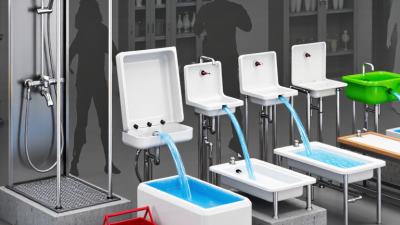
Compare Portable, Plumbed, and Self-Contained Eyewash Systems
How to Choose Emergency Eyewash Equipment for Global Buyers?
Emergency Safety Equipment
should match the workplace, not just the purchasing budget. Portable eyewash units suit temporary sites, maintenance areas, and locations without fixed water lines. They can be moved quickly, but their tanks require regular refilling, cleaning, and inspection. A forgotten refill creates false confidence. I have seen units look ready while their solution had already expired.
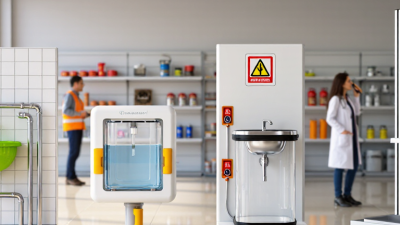
Plumbed eyewash systems provide a continuous water supply and work well in permanent factories, laboratories, and warehouses. They need correct pipe sizing, clean water, suitable drainage, and protection from freezing or overheating. Weekly activation can reveal weak flow, blocked spray heads, or rusty valves. Installation is more demanding, and poor placement can make an expensive system useless during an accident.
Self-contained systems store flushing fluid in an independent tank. They are practical where plumbing is unreliable or unavailable. Check the tank capacity, fluid expiry date, mounting height, and access path. Many specifications call for about 15 minutes of flushing, but buyers should verify local requirements and site conditions. Portable and self-contained units may need more disciplined maintenance than expected. That is the part procurement teams sometimes underestimate. A simple inspection log, visible instructions, and hands-on staff training can prevent small oversights from becoming serious delays.
Evaluate Water Flow, Spray Pattern, Capacity, and Activation Features
Choosing emergency eyewash equipment for global facilities requires more than checking a product photograph. Water flow must be steady, gentle, and sufficient to rinse both eyes at once. During site inspections, technicians often measure flow with a calibrated container, not by appearance alone. Weak pressure can leave contaminants behind, while excessive pressure may cause discomfort or further injury.
The spray pattern deserves equal attention. Twin outlets should cover the eyes without forcing the user to aim precisely. A broad, controlled stream is usually more practical during panic. Test the unit with clean water and observe whether both eyes remain covered. Small alignment problems matter. They are easy to miss.
Capacity depends on the water source, user risk, and expected response time. Plumbed-In Emergency Equipment suits fixed workplaces with reliable plumbing, but its supply line still needs protection from freezing, heat, and contamination. Self-contained tanks may help remote sites, yet their refill schedule is often underestimated. Check activation features with gloves, wet hands, or limited visibility. A large push plate is easier to find than a small lever. Labels should remain readable after cleaning.
Ask suppliers for flow data, material specifications, maintenance instructions, and applicable testing evidence. Requirements differ between countries and industries. A document can look complete yet omit installation limits. That deserves careful questioning before purchase.
How to Choose Emergency Eyewash Equipment for Global Buyers?
Minimum water capacity calculated from a continuous 15-minute flow requirement.
Water flow and capacity: ANSI/ISEA Z358.1 specifies a minimum flow of 0.4 US gallons per minute (approximately 1.5 L/min) for emergency eyewash equipment and 20 US gallons per minute (approximately 75.7 L/min) for drench showers. Both are intended to provide flushing for at least 15 minutes, which corresponds to approximately 22.7 L and 1,135.6 L of water respectively.
Spray pattern: Select eyewash units that deliver two simultaneous, gentle streams positioned to flush both eyes without causing injury. The spray should cover the eyes, face, and surrounding area consistently.
Activation features: The equipment should activate in one second or less, remain open without requiring the user's hands, and be easy to operate while visibility is impaired. For global installations, also verify local plumbing, temperature, accessibility, and maintenance requirements.
Select Materials and Designs for Different Industrial Environments
Choosing emergency eyewash equipment starts with the working environment, not appearance. Chemical plants often need stainless steel units with corrosion-resistant valves and smooth, easy-to-clean surfaces. In coastal areas, salty air can attack ordinary metal quickly. A protective coating helps, but it can eventually wear.
Food-processing facilities require hygienic designs with minimal dirt traps. Stainless steel is usually practical, while sealed fittings reduce contamination risks.
For dusty workshops, dust covers can protect spray heads between inspections. They must open easily during an emergency. A cover that sticks is a serious design flaw.
Cold warehouses need freeze-resistant systems, insulated pipes, or heated enclosures. Heated models should control temperature reliably without creating hot surfaces. In large factories, floor-mounted units offer clear visibility and strong access. Wall-mounted designs save space in narrow corridors.
Drainage matters too. Standing water can create slipping hazards and maintenance problems. Field teams should test activation, spray coverage, and water quality on a planned schedule. Confirm the equipment follows applicable regional requirements, such as recognized eyewash performance standards.
Material choice alone is not enough. Poor placement can make excellent equipment useless. Some buyers focus heavily on purchase price, then discover higher cleaning and repair costs. A simple inspection record can expose those hidden weaknesses.
Verify Installation, Maintenance, Training, and Global Supply Support
Choosing emergency eye wash equipment requires more than comparing flow rates and prices. OSHA 29 CFR 1910.151(c) requires suitable flushing facilities where corrosive materials may contact the eyes. ANSI/ISEA Z358.1 specifies tepid water, a 15-minute flush, and activation within one second. Place emergency eye wash equipment within a ten-second travel distance, with no doors or obstacles blocking access. Verify this distance on the actual floor plan, not only in technical drawings.
Installation checks should confirm stable water pressure, visible signage, drainage, and protection from freezing or excessive heat. ANSI/ISEA Z358.1 also recommends weekly activation and annual performance verification. Maintenance records should show dates, test results, cleaning actions, and replaced components. Small gaps matter. A dusty nozzle or closed valve can delay treatment. Some buyers focus too heavily on certification and overlook local water quality, pipe materials, and site conditions.
Training must be practical. Workers should locate the unit while wearing gloves and safely practice opening the valve. The U.S. Bureau of Labor Statistics continues to report thousands of workplace eye injuries involving days away from work each year, showing that prevention cannot stop at installation. Global supply support should include multilingual instructions, spare parts, remote troubleshooting, and confirmed delivery times. ISO 3864 safety-sign principles can help standardize visual guidance across facilities. This sounds complete, but it is not always enough. Recheck supplier response after shipment, because emergency readiness depends on support that still works months later.
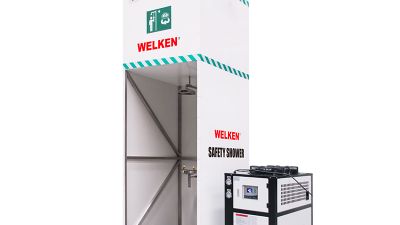
BD-602B-GH GRP Tank-Fed Safety Shower: Cooling System, Features, Benefits & Buying Guide
The BD-602B-GH GRP Tank-Fed Safety Shower is engineered for industrial sites in tropical, high-heat, and remote environments where a dependable water supply may not be available. Its independent storage tank provides immediate access to emergency washing water, while the integrated cooling system helps control water temperature during prolonged exposure to intense sunlight. A high-performance insulation layer further reduces heat transfer, helping prevent stored water from becoming dangerously hot when conventional tanks would be difficult to use safely.
Constructed with a durable glass-reinforced plastic enclosure and a robust 304 stainless steel internal frame, the unit is designed to withstand demanding outdoor conditions while maintaining structural stability. Its tank-fed configuration supports flexible installation at factories, construction areas, energy facilities, chemical-processing sites, and other locations that require accessible emergency equipment. The enclosed design also helps protect internal components from weather and environmental wear, reducing maintenance demands over time.
When choosing this type of safety shower, consider the required water capacity, available installation space, local climate, inspection procedures, and the ease of refilling and servicing the cooling system. Confirm that the shower location is clearly accessible, supported by suitable drainage, and regularly checked for water quality, operating performance, and overall equipment condition.
FAQS
Chemicals, solvents, disinfectants, metalworking fluids, dust, and pressurized sprays can injure eyes. Splashes may reach the face within seconds. A quiet workstation is not automatically safe.
Walk through laboratories, production lines, maintenance rooms, and loading areas. Map each hazard and its exposure path. Place equipment along clear routes without doors, stairs, or stored materials blocking access.
Portable units suit temporary sites and areas without fixed water lines. Plumbed systems fit permanent factories, laboratories, and warehouses. Self-contained units work where plumbing is unreliable.
Check fluid levels, expiry dates, tank cleanliness, and visible damage. Refill and clean the tank on schedule. A forgotten refill creates false confidence.
Confirm clean water, suitable pipes, drainage, and reliable flow. Activate the unit regularly to find blocked heads or rusty valves. Installation quality matters greatly.
Corrosion-resistant metal suits chemical areas and salty coastal air. Smooth surfaces and sealed fittings support hygienic cleaning. Protective coatings can wear over time.
Cold warehouses may need insulated pipes or freeze-resistant designs. Dusty workshops may need easy-opening covers for spray heads. A cover that sticks is a serious flaw.
Check activation, spray coverage, water clarity, flow strength, drainage, and access. Test the real travel route, not just the equipment. A checklist can still miss a blocked aisle.
Compare cleaning, refilling, repairs, drainage, and inspection needs. Do not focus only on the purchase price. I would review the maintenance log carefully.
Conclusion
Choosing the right Emergency Eyewash Equipment begins with a clear assessment of workplace hazards, including chemicals, dust, corrosive substances, and other materials that may injure the eyes. Global buyers should then review the applicable standards and regulations in each target market to ensure the equipment meets local safety expectations. The choice between portable, plumbed, and self-contained systems depends on facility layout, water access, mobility requirements, and emergency response needs.
Important selection factors include water flow, spray pattern, flushing capacity, activation speed, and ease of use under stressful conditions. Materials and construction should match the working environment, such as laboratories, manufacturing plants, warehouses, or outdoor sites. Buyers should also confirm installation requirements, routine maintenance procedures, employee training needs, replacement parts availability, and supplier support across regions. A well-planned purchase should provide reliable emergency flushing, simple operation, durable performance, and dependable long-term support while fitting the facility’s specific risks and operating conditions.