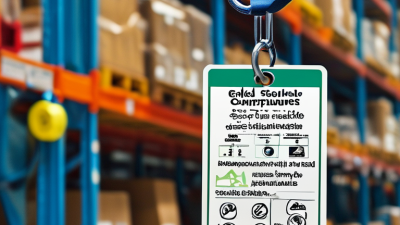
Honestly, Safety Tags are pretty small—but their message? It can really shape what happens around a machine, panel, or work area. A clear tag does more than you'd think: it flags hazards, shows whether equipment is good to go, and makes instructions way easier to spot when you're already running around. A faded label or a weak attachment, though? That can easily do the opposite. So yeah, details matter.
So, you're looking for the best safety tags for 2026? I've put together this rundown of the top 10, and honestly, what really matters isn't the flashy marketing stuff—it's the practical details. We're talking readable text, high contrast, materials that won't fall apart, attachments that actually hold, and enough room to jot down site-specific info. Think about it: a tag hanging next to a locked control panel, getting dusty, bumped by gloves, and checked over and over. It's gotta stay legible in real life, not just in a slick product photo. That's the real deal, you know?
Honestly, the right tag really depends on the situation you're dealing with. Some workplaces need something that can handle a bit of moisture or rough handling, while others just need a clear spot to write on or colors that really pop. But here's the thing—no tag is ever going to replace proper training or a solid hazard assessment. I've seen even the best-designed tags get completely ignored when people are in a hurry. That's something worth keeping in mind. Anyway, the options we've rounded up below are meant to help safety folks, maintenance crews, and buyers compare what's out there, keeping those real-world limits in mind. So, before you roll out any product for everyone to use, you really should take a look at its specs and give it a spin in the actual workspace – see how readable it is where people will actually encounter it. A simple tag might sound like a quick fix, but it only helps if the message is super clear and folks know exactly what they need to do next. I mean, that's the whole point, right?
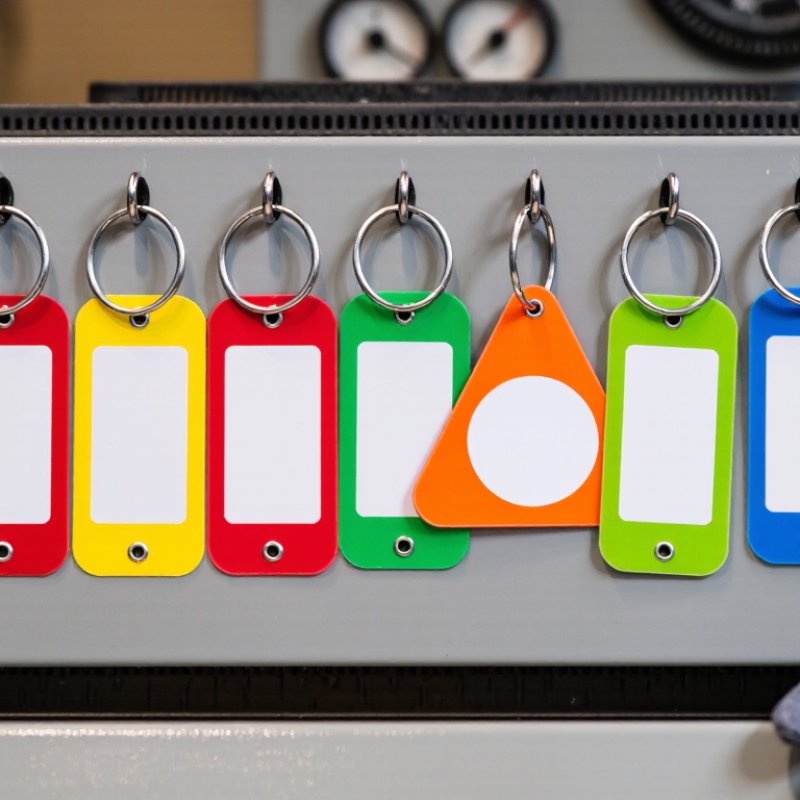
Workplace safety tags make hazards and equipment status visible where work happens. They can flag a damaged ladder, identify equipment awaiting inspection, or communicate a restricted operating condition. Small details matter. A tag is useful only when workers can read it, understand it, and connect it to a clear action.
On a busy floor, a tag hidden behind a hose or covered in grime may be missed. Use brief wording, strong contrast, and placement near the relevant handle, panel, or access point. Chemical Resistant Safety Tags may suit areas exposed to cleaners or process fluids, but material choice depends on the chemical, temperature, and contact time. Check product specifications and site procedures rather than assuming one material fits every task. Tags support training and work controls; they do not replace them.
Include practical details such as equipment ID, hazard, date, and responsible role when your procedure calls for them. Inspect tags during routine walk-throughs. Replace ones that are faded, torn, or detached, and ask workers whether the message is clear. Even a correct tag can fail if it blends into the background or uses unfamiliar terms. That weakness is easy to overlook. Review tag placement after equipment or workflow changes, because yesterday’s clear location may not work today.
A safety tag is useful only when its message matches the hazard nearby. For a machine awaiting repair, use an out-of-service tag that names the fault, such as “guard missing,” and states who to contact. Add the date and responsible person so the warning does not become anonymous. Keep the wording brief. “Do not operate” is clearer than a paragraph. Small details matter.
Match the tag’s signal to the level and type of risk. A warning tag can flag a slippery floor near a wash station, while a danger tag may identify equipment that could cause serious injury. For maintenance, a tag should support the site’s energy-control procedure, not replace it. Color helps, but never rely on color alone; workers need readable words and familiar symbols. Less guesswork.
Consider the setting, too. In a damp area, choose a durable tag that stays legible when splashed. For chemical storage, identify the specific hazard and point workers to the relevant handling instructions; a vague “caution” label offers little guidance. Check tags during routine inspections for fading, torn ties, or outdated details. One easy detail to miss is visibility: a correct tag hidden behind a pipe cannot warn anyone. It is worth stepping back and checking the view from a worker’s approach.
| Safety Tag Type | Best Matched Hazard | Typical Placement | Recommended Construction | Information to Include |
|---|---|---|---|---|
| Lockout/Tagout (LOTO) Tag | Unexpected startup or release of stored energy during servicing or maintenance | Attached to the energy-isolating device used in the lockout/tagout procedure | Durable, standardized, substantial material suited to the environment; use a secure attachment method | “Do Not Operate,” the reason for the lockout, the authorized employee’s name, and the date applied, as required by the site procedure |
| Electrical Hazard Tag | Electrical shock, arc-flash exposure, or access to electrical equipment under restriction | On or near the affected panel, switchgear, equipment, or restricted access point | High-visibility, tear-resistant material; choose a surface and attachment suitable for the location | Hazard description, equipment or area identifier, restriction or required action, and responsible contact |
| Fall-Protection Inspection Tag | Falls from heights involving harnesses, lanyards, lifelines, or other fall-protection equipment | On the equipment or its storage location, where users can check it before use | Weather-resistant, writable tag or inspection card that can be updated without obscuring earlier information | Equipment ID, inspection status, inspection date, inspector, and any removal-from-service instruction |
| Confined-Space Warning Tag | Atmospheric, engulfment, entrapment, or other hazards associated with confined spaces | At the entrance or access point to the space | Large, high-contrast, weather-resistant tag or sign that remains legible at the entry | “Permit-Required Confined Space” where applicable, entry restrictions, required authorization, and emergency contact information |
| Chemical Hazard Tag | Exposure to hazardous chemicals from containers, lines, or process equipment | On the container or at the point of use, transfer, or isolation | Chemically compatible material that resists the substances and conditions expected at the location | Chemical or process identification, relevant hazard warnings, required precautions, and reference to the safety data sheet |
| Out-of-Service Equipment Tag | Use of damaged, defective, or unsafe tools, machinery, or equipment | Attached directly to the equipment’s controls or another prominent point | Durable, tear-resistant material with a secure attachment that will not interfere with safe isolation | “Do Not Use,” defect or reason, date tagged, person reporting the issue, and repair or release process |
| Hot Work and Fire-Watch Tag | Fire or burns from welding, cutting, grinding, or other hot work | At the hot-work area or permit display point | High-visibility tag suitable for the work area; keep it clear of sparks, heat, and obstructions | Work location, authorization or permit reference, required precautions, fire-watch assignment, and applicable time limits |
| Crane and Rigging Inspection Tag | Load drops, equipment failure, or injury involving hoists, slings, and rigging gear | On the lifting accessory or at the equipment’s designated inspection point | Rugged, abrasion-resistant tag that remains readable during handling and storage | Equipment ID, inspection status and date, applicable rated capacity where appropriate, and removal-from-service status |
| Traffic and Pedestrian Hazard Tag | Vehicle movement, reversing equipment, loading zones, and pedestrian interaction | At temporary work-zone boundaries, crossings, loading areas, or access routes | High-contrast, weather-resistant material sized for visibility at the intended viewing distance | Specific hazard, direction of travel or restricted route, required action, and any temporary access instructions |
| Biological Hazard Tag | Potential exposure to infectious materials or contaminated equipment and areas | At the entrance to affected areas or on designated containers and equipment | Moisture-resistant, legible material compatible with the cleaning and disinfection process | Nature of the hazard, access or handling precautions, required protective measures, and responsible contact |
| Selection note: Match each tag’s wording, material, attachment, and visibility to the actual hazard and workplace conditions. Tags communicate warnings or status; they do not replace required safeguards, procedures, permits, or energy-control measures. Follow applicable regulations and site-specific requirements. | ||||
The 10 Best Safety Tags for Workplace Safety in 2026 should match real hazards, not just look prominent. The U.S. Bureau of Labor Statistics reported 2.6 million nonfatal workplace injury and illness cases in private industry in 2023. Its fatal-injury census recorded 5,283 work-related deaths that year. Tags cannot prevent every incident, but clear, durable warnings can help workers recognize danger before they touch equipment. Small details matter: a readable message, a visible location, and a date or responsible person where appropriate. A tag cannot stop a machine. It must support a safe work procedure.
Useful choices include danger, warning, and caution tags; lockout and out-of-service tags; inspection-due tags; confined-space entry tags; chemical-hazard tags; overhead-work tags; and temporary electrical-work tags. Choose wording that says what is wrong and what action is required. For example, “Do not operate” is clearer when paired with the equipment identifier and the reason for the restriction. Chemical tags should reinforce, not replace, required hazard labels and safety data. Lockout tags must be used within an established energy-control process. That distinction is easy to miss. In practice, faded ink, loose ties, and vague dates can make a good tag unreliable, so teams should check them during routine inspections.
Choosing Danger Tags means weighing material, visibility, and durability against the conditions on site. OSHA estimates that lockout/tagout procedures prevent about 120 deaths and 50,000 injuries each year. Its hazardous-energy standard requires tags to withstand the environment, remain legible, and identify the person applying them. A paper tag may suit a dry, short-term task, but moisture can soften it and blur handwritten warnings. Laminated or synthetic tags generally handle damp areas better; check that the attachment and printed message hold up to cleaning chemicals, heat, and abrasion.
Visibility is more than bright color. Place the tag near the control point, keep the wording readable at arm’s length, and avoid covering it with hoses or equipment. OSHA calls for standardized tagout devices, yet color alone cannot explain a hazard. Use clear words, consistent symbols, and enough contrast for dim or dusty spaces. Small detail. Still important. Before purchase, test samples in the actual work area: hang one near a machine, expose it to routine cleaning, then inspect the edges and print. This simple check can reveal a weakness that a catalog photo misses. Durable tags help, but they cannot replace worker training or a verified energy-control process.
Place each safety tag where a worker makes a decision, not merely where it is easiest to attach. A machine isolation tag should be visible beside its control point. A chemical container tag belongs on a surface that stays readable during normal handling. Keep tags clear of handles, warning lights, and moving parts. Use secure fasteners suited to the equipment and work area. Equipment Id Tags can help identify assets, but they should not replace hazard or status information. Check that the tag’s wording is specific, legible, and understood by the people who use it.
Tips: Walk the work area from a worker’s viewpoint. Can you spot the tag before touching the equipment? Check tags during routine inspections for fading, tears, loose ties, dirt, or outdated details. Replace damaged tags promptly, and update information when equipment status changes. A quick check is useful. Still, inspection intervals may need to change in dusty, wet, or high-traffic areas. Record who checked each tag and when. A tidy tag system can look reliable while a single misplaced tag remains easy to miss.
A safety tag is useful only when workers can understand it quickly. Choose tags with clear wording, strong contrast, and space for the equipment name, hazard, date, and responsible person. Do Not Operate Tags should be placed where an operator will see them before touching a control. They support workplace procedures; they do not replace required isolation steps. A small tag on a crowded panel can be missed. That detail matters.
Tips: Keep the message brief. Use durable tags suited to the work area, and write legibly with a permanent marker. Confirm that each tag matches the equipment and the current work. Don’t guess.
Training should explain who may attach or remove tags, what each message means, and how to report a damaged or unclear tag. Use real examples, such as a tag on a pump handle or beside a maintenance switch. Ask workers to describe what they would do next. If answers differ, the instruction may need improvement. Inspections can check tag condition, placement, and completeness during routine site walks. Record gaps and assign follow-up actions. A checklist helps, but it can become a box-ticking exercise; supervisors should also speak with workers and examine the actual work area.
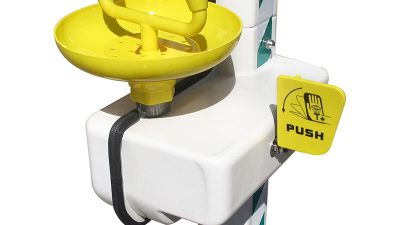
The U.S. Bureau of Labor Statistics (BLS) reported approximately 2.6 million nonfatal workplace injuries and illnesses among private-industry employees in 2023, an incidence rate of 2.4 cases per 100 full-time-equivalent workers. These figures underline the importance of reliable emergency equipment wherever workers may encounter hazardous substances. In cold-weather facilities, however, an emergency shower or eyewash station is only useful if water can flow when needed.
A heated emergency shower and eyewash station designed for sub-zero conditions can help address the risk of frozen internal plumbing. Its integrated heat-tracing system is intended to keep water from freezing, supporting readiness in industrial plants, on oil rigs, and at outdoor worksites exposed to severe cold. For facilities in China and other cold regions, this added protection can help maintain access to emergency rinsing equipment during a chemical exposure incident.
BLS recorded 5,283 fatal work injuries across all industries in 2023. Although these national figures do not specifically measure cold-related equipment failures, they reinforce the value of proactive workplace safety planning. Selecting a station built for low temperatures—and maintaining it through routine inspection and testing—can help employers keep emergency response equipment operational in harsh weather.
It makes a hazard or equipment status visible near the work area. For example, it can flag a damaged ladder or equipment awaiting inspection.
Place it where a worker decides what to do, such as beside a machine control or pump handle. Keep it clear of moving parts, handles, and warning lights.
Include the equipment ID, hazard, date, and responsible role when site procedures call for them. Keep the wording brief and readable.
Use strong contrast and materials suited to the work area. Check whether fluids, heat, dirt, or frequent handling affect the tag. No material fits every task.
Check them during routine walk-throughs, and more often in dusty, wet, or busy areas. Record who checked each tag and when.
Replace tags that are faded, torn, dirty, loose, or detached. Update them when equipment status changes. A quick glance can miss a small tear.
Explain who may attach or remove tags, what each message means, and how to report unclear tags. Ask workers what they would do after seeing a tag. Listen carefully.
No. Tags support work procedures but do not replace required isolation steps. A tag can look clear and still be placed where nobody sees it; review the actual work area.
Safety Tags play an important role in workplace safety by making hazards, restricted areas, and equipment status easier to recognize. Choosing the right tag starts with understanding the risk it needs to communicate, then matching its wording, color, size, and attachment method to the work environment. The ten recommended types cover common needs, from warning about physical hazards to identifying equipment that requires attention. Clear messages and strong visibility help workers understand what action to take.
A tag’s material and durability should suit its location, exposure, and expected use. For effective results, place tags where people can see them before reaching a hazard, keep them readable, and replace any that are damaged or outdated. Consistent procedures, worker training, and routine inspections help ensure tags remain accurate and useful. When workplace teams select, position, and maintain tags thoughtfully, they can support clearer communication and safer day-to-day decisions.