Leave Your Message
0%

Choosing the right Chemical Eyewash isn't just about picking something off a catalog—it's a practical safety decision, really. When you're out shopping for these units globally, you’ve gotta compare how well they flush, how easy they are to install, what kind of maintenance they need, and how accessible they are for users. Honestly, the best one is the one your workers can find quickly, activate without hassle, and actually trust in a stressful emergency situation.

This guide looks at the 2026 chemical eyewash market through four main types: plumbed eyewash stations, portable units, self-contained systems, and combo emergency showers. Each one fits different workplace setups. For example, a busy lab might need a compact wall-mounted station, while a remote processing area could require a portable unit with protected fluid storage. And in high-risk production zones, you might need an integrated shower and eyewash combo—which makes total sense.

Dr. David Michaels, who used to be OSHA’s Assistant Secretary of Labor, once said, “Worker protection must be based on evidence, not assumptions.” And honestly, that’s a key point here. You can’t just rely on product labels to say they’re suitable. You really need to dig into details like how long they flush, flow control options, water quality, temperature controls, inspection records, and spare parts availability.

Little things really matter. A blocked access path can delay a quick response, and an expired preservative could undermine confidence in the unit. Even if a station looks good on paper, if it’s poorly positioned, it might satisfy a checklist but fail when it counts most. Sometimes, those small oversights make all the difference.

This article compares the top chemical eyewash options for international buyers in 2026. We also look at different regional standards, workplace layouts, climate factors, and after-sales support. Every market has its quirks, so it’s essential to do a proper safety assessment. And don’t forget: the product you choose should be thoroughly documented, tested, and reviewed once installed—it’s all about making sure it will do its job when it really matters.
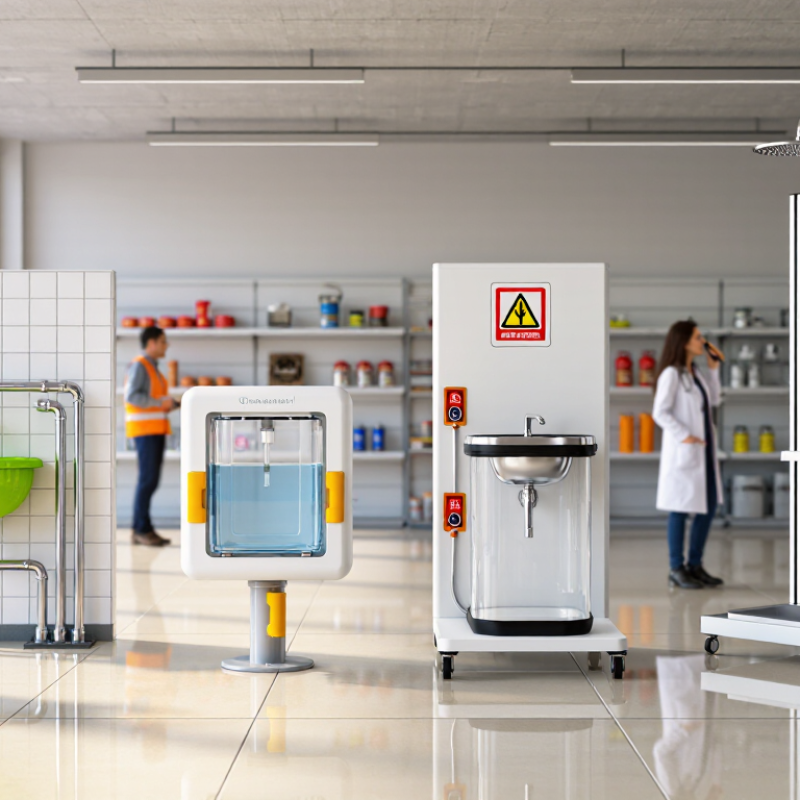
2026 Top Chemical Eyewash Types for Global Buyers

Chemical Eyewash Fundamentals: 15-Minute ANSI/ISEA Z358.1 Flushing

For 2026 chemical safety projects, buyers should judge an eyewash by flushing performance, not appearance. ANSI/ISEA Z358.1 requires a continuous, gentle flow for at least 15 minutes. The eyewash should deliver approximately 1.5 liters per minute to both eyes simultaneously. Water should be tepid, generally between 16°C and 38°C, to reduce shock and encourage complete flushing.

Plumbed eyewashes suit fixed laboratories, factories, and chemical handling areas with reliable water supplies. Self-contained units offer flexibility where plumbing is unavailable, but their tanks require scheduled cleaning, refilling, and temperature control. Personal rinse bottles may provide immediate support during the first seconds. They are not a substitute for a compliant 15-minute eyewash station. Keep the unit reachable within about ten seconds, on the same level, and free from doors, pallets, or stored materials.

Test activation regularly. The spray pattern should rise quickly, remain stable, and allow the user’s hands to hold the eyelids open. In real facilities, blocked access is often the bigger failure. A perfect unit cannot help behind cartons. I have also seen inspections focus on flow while ignoring expired tank water. That approach needs reconsideration. Buyers should document weekly activation checks, maintenance dates, water quality controls, and worker training. Local requirements may add stricter conditions, so technical review should involve qualified safety personnel before purchase and installation.

Plumbed Eyewash Stations: 0.4-gpm Flow for Continuous Facility Use

2026 Top Chemical Eyewash Types for Global Buyers

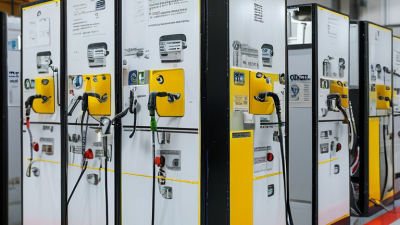
Plumbed eyewash stations remain a practical choice for facilities handling corrosive chemicals. They connect directly to a reliable water supply and stay ready for immediate use. A compliant unit should deliver at least 0.4 gallons per minute for 15 minutes, supporting thorough flushing after exposure. The water stream should reach both eyes gently, without sharp pressure. Clear floor access matters. A blocked path can delay response when every second counts.

In real facility checks, poor placement causes more trouble than equipment selection. Install the station near chemical work areas, preferably within a short, unobstructed route. Use a protective cover to keep dust away from the spray heads. However, covers must open automatically when the unit is activated. Weekly activation helps confirm water flow, valve movement, and drainage. Some teams record these checks carefully; others rely on memory. That is a weak point worth correcting.

Tips: Confirm the local installation standard before purchasing. Test water temperature and pressure under normal operating conditions. Inspect filters, labels, and access space regularly. Train workers to hold their eyelids open during flushing. A sign alone is not enough. Also, review whether one station serves too many work zones. Distances can look acceptable on a layout but feel much longer during an emergency.

Self-Contained Units: 15-Minute Capacity Without Permanent Plumbing

Self-contained units are becoming practical choices for chemical handling areas without permanent plumbing. A Chemical Eye Wash Station should deliver a continuous, gentle flow for at least 15 minutes. This requirement comes from ANSI/ISEA Z358.1, the widely referenced emergency eyewash standard.

The unit stores flushing fluid inside a sealed tank. A worker can activate it with one hand, even while holding an eyelid open. In a busy laboratory, that matters. A portable station can sit beside a mixing bench, with its fluid level visible through a clear gauge. OSHA 29 CFR 1910.151(c) also requires suitable flushing facilities where corrosive materials may contact workers’ eyes or body.

Capacity is not the only purchasing measure. Buyers should check nozzle hygiene, fluid expiration dates, temperature control, inspection access, and mounting stability. The International Labour Organization reports that millions of workers suffer occupational injuries or illnesses each year, reinforcing the need for equipment that works immediately.

Fifteen minutes sounds simple. Maintenance is harder.

A forgotten refill can turn compliance into false confidence. Dusty caps, blocked nozzles, or expired solution may delay treatment. Chemical compatibility also needs review, because one flushing fluid may not suit every workplace exposure. Global buyers should match the station’s capacity, inspection schedule, and installation height with local risk assessments and applicable standards.

Portable Eyewash Bottles: Immediate Rinse Within the First Critical Seconds

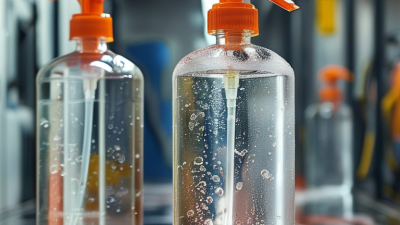
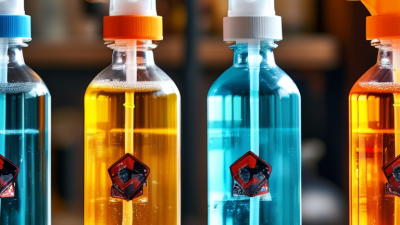
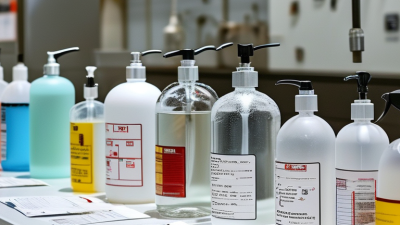
Portable eyewash bottles can deliver immediate rinsing during the first critical seconds after chemical exposure. They are useful when a worker cannot reach a fixed sink or safety shower quickly. A compact bottle may fit beside a mixing bench, inside a vehicle, or near a laboratory entrance. Its nozzle should open easily and direct a steady stream across both eyes. Keep the bottle within reach, not behind locked storage. Seconds matter.

Choose a bottle with enough fluid for continuous flushing, a clear expiry date, and an intact seal. Inspect it during routine workplace checks. Look for leaks, cloudy liquid, damaged caps, or blocked nozzles. Store it away from direct sunlight and extreme temperatures. Staff should practice opening and using it, because panic makes simple actions surprisingly difficult. A portable bottle is not a complete Chemical Burn Treatment Station. It provides immediate first aid while the person moves toward a plumbed eyewash or medical assessment. It may also empty sooner than expected. That limitation deserves honest attention.

Place instructions beside the bottle in clear language. If exposure occurs, hold the eyelids open and rinse continuously, removing contact lenses when possible. Do not rub the eyes or delay flushing to find paperwork. Follow the chemical’s safety information and seek professional medical care after rinsing. Regular drills can reveal awkward placement, weak lighting, or bottles that workers cannot grip easily. Those small findings often improve real-world response more than new equipment alone.

Combination Stations: Eyewash and Shower Coverage Under ANSI/ISEA Z358.1

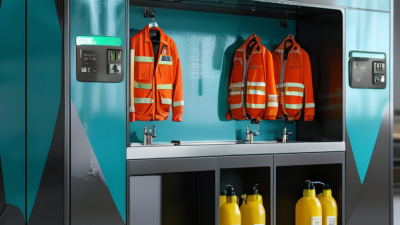
Combination stations integrate an eyewash and emergency shower in one visible, reachable unit. They suit laboratories, chemical storage rooms, and processing areas where splash risks can affect the face and body.

ANSI/ISEA Z358.1-2014 (R2020) calls for flushing fluid to remain available for at least 15 minutes. Activation should begin within one second. Water should be tepid, generally between 60°F and 100°F.

The U.S. Occupational Safety and Health Administration reports that workplace eye injuries affect about 1,000 workers daily. That figure is older, but still difficult to ignore.

A combination station can reduce response time when a worker’s hands are contaminated or vision is impaired. Clear access matters more than polished equipment.

Buyers should verify flow performance, drainage, freeze protection, and weekly activation procedures.

The standard also expects equipment to be identified and accessible, not hidden behind stored containers. Chemical Resistant Loto Tags can support inspection control around isolation points, but they cannot replace station testing or hazard assessment.

The International Labour Organization’s Safety and Health at Work report identifies hazardous chemical exposure as a continuing global workplace concern. Local plumbing, water, and installation rules may add requirements beyond ANSI/ISEA Z358.1.

This is where specifications become less simple. A station may pass a catalog checklist yet fail in a cold, crowded, or poorly lit facility. Real-site testing should challenge the design.

2026 Buyer Criteria: 60–100°F Water, OSHA 1910.151(c), and Global Fit

Chemical eyewash selection in 2026 should begin with exposure risk, not price. Plumbed units suit fixed laboratories and production lines with reliable water supply. Self-contained units support remote areas, but their reservoirs require strict inspection and replacement records. Combination stations are useful where both eye and body flushing may be needed.

Water should remain tepid, generally 60–100°F, during operation. Extremely cold water can discourage a full flushing period. Hot water can increase chemical injury. OSHA 1910.151(c) requires suitable facilities for quick eye and body flushing near corrosive exposure areas. Buyers should also verify local requirements, drainage capacity, pressure, pipe materials, and maintenance access. Global fit is rarely automatic. A unit may meet one standard but fail a facility’s climate, language, or installation conditions.

Tips: Test spray patterns weekly, and document every result. Keep access clear, even when pallets move. Use Chemical Resistant Safety Tags with simple symbols and multilingual instructions. Check dust covers, nozzles, valves, and expiration dates. A clean-looking station can still have blocked flow. That is easy to miss. I would also request temperature records during the hottest and coldest seasons, because factory conditions often change more than purchasing teams expect. Safety showers need visible lighting, stable floor space, and enough clearance for injured workers wearing protective clothing.

2026 Top Chemical Eyewash Types for Global Buyers - 2026 Buyer Criteria: 60–100°F Water, OSHA 1910.151(c), and Global Fit

Buyer reference: OSHA 29 CFR 1910.151(c) requires suitable facilities for quick drenching or flushing of the eyes and body when a person may be exposed to injurious or corrosive materials. OSHA does not specify a single eyewash design or water-temperature range; 60–100°F (16–38°C) is the tepid-water criterion commonly used under ANSI/ISEA Z358.1.

Eyewash Type Typical Installation Water Supply Tepid-Water Capability Typical ANSI/ISEA Z358.1 Flow Benchmark* Recommended Use Global-Fit Considerations Main Limitations
Plumbed emergency eyewash Fixed indoor or sheltered location connected to a potable or suitable water line Continuous building water supply Requires temperature control, tempering valve, or suitable facility water system to maintain 60–100°F At least 0.4 gal/min (1.5 L/min) for 15 minutes for an eyewash Laboratories, chemical rooms, production areas, and permanent workstations Generally suitable where local plumbing, drainage, and potable-water requirements can be met Dependent on water pressure, pipework, freeze protection, maintenance, and reliable access to the building supply
Plumbed eye/face wash Fixed station with larger spray pattern for both eyes and the surrounding face Continuous building water supply Needs a verified tempering arrangement or controlled water source At least 3.0 gal/min (11.4 L/min) for 15 minutes for eye/face coverage Operations involving splashes to the face, such as chemical transfer or bulk handling Useful for sites with established plumbing and a need for broader coverage than an eyewash alone Higher water demand, larger drainage requirement, and greater installation cost than an eyewash-only station
Combination eyewash and emergency shower Fixed unit combining eye/face nozzles with a body drench shower Continuous, adequately sized water supply Usually requires engineered temperature control for the combined demand Eyewash: 0.4 gal/min; eye/face: 3.0 gal/min; shower: commonly 20 gal/min, each for 15 minutes where applicable Corrosive or highly hazardous areas where both eye and full-body exposure are credible Strong fit for industrial sites, but local drainage, structural, water, and electrical requirements must be reviewed Requires substantial water capacity, floor drainage, space, inspection, and freeze protection
Self-contained gravity-flow eyewash Standalone tank or reservoir mounted near the hazard area Pre-filled reservoir; no permanent plumbing connection Can be filled with water within 60–100°F; temperature must be monitored during service Must deliver the applicable continuous flow for 15 minutes when designed and tested to the selected standard Remote areas, temporary projects, leased facilities, or locations without reliable plumbing Portable across sites and useful where local pipe connections are unavailable Requires scheduled filling, cleaning, preservative control where applicable, expiration tracking, and protection from heat or freezing
Pressurized self-contained eyewash Standalone vessel pressurized according to the equipment instructions Sealed or refillable reservoir with stored pressure Can support tepid water when filled and maintained within the specified temperature range Flow performance must be verified for the complete 15-minute emergency period Mobile work areas, utility rooms, construction sites, and locations with intermittent water service Flexible deployment and reduced dependence on building plumbing Needs pressure checks, vessel inspection, refill procedures, and controls for transport and temperature changes
Portable personal eyewash bottle Small bottle carried by workers or placed at individual work points Limited bottle volume Usually stored at a controlled ambient temperature; the bottle supply is not a substitute for a full 15-minute station Normally intended for immediate first aid and not as the sole ANSI emergency eyewash where a full station is required Supplementary first response during transport to a compliant emergency station Low cost, easy to distribute, and useful for mobile or low-volume tasks Short duration, limited flushing volume, replacement dates, contamination risk, and poor suitability as the primary control
Specialty heated or insulated eyewash Fixed or self-contained unit designed for cold, outdoor, or temperature-variable environments Plumbed or stored water with insulation, heat tracing, or an integrated temperature-control system Designed to keep the delivered water within the 60–100°F operating range under specified conditions Must meet the flow and 15-minute duration applicable to the selected eyewash or eye/face configuration Outdoor chemical storage, cold rooms, unheated warehouses, and severe seasonal climates Improves readiness where freezing or excessive water temperature could prevent safe use Higher energy use, additional controls, electrical protection, servicing, and installation complexity

2026 buyer-selection criteria

  • Locate the emergency station in the same work area, on an unobstructed route, and close enough for rapid access after exposure.
  • Use 60–100°F (16–38°C) tepid water as the target range for continuous flushing; verify actual delivered temperature rather than relying only on ambient temperature.
  • Confirm a continuous 15-minute flushing capability for the applicable eyewash, eye/face wash, or combination unit.
  • Use OSHA 1910.151(c) as the U.S. regulatory baseline and check the destination country’s occupational-safety, plumbing, electrical, accessibility, and water-quality rules.
  • Evaluate weekly activation or inspection practices, annual equipment assessment, cleaning or refill intervals, spare-part availability, signage, lighting, drainage, and freeze protection.
  • Do not treat a small personal eyewash bottle as a replacement for a compliant emergency eyewash or combination station when the hazard assessment requires full-duration flushing.

*ANSI/ISEA Z358.1 is a voluntary consensus standard commonly used to assess emergency eyewash and shower performance. Requirements can vary by equipment configuration and jurisdiction. Always verify the current edition, the product’s test documentation, and applicable local regulations before purchase or installation.

Premium BD-550A Plumbed Foot Control Shower & Eyewash Unit: Features, Benefits, and Safe Solutions

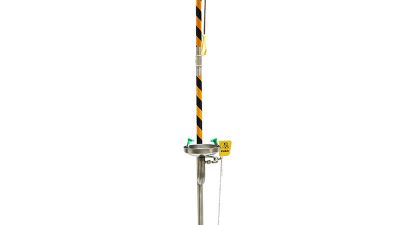
The BD-550A Plumbed Foot Control Shower & Eyewash Unit is designed for rapid emergency response wherever hazardous substances, dust, or contaminants may affect workers. This premium floor-mounted system combines a high-capacity drench shower with a precision-flow eyewash station, allowing users to activate the equipment immediately while keeping both hands available for rinsing. Constructed from durable 304 stainless steel, it offers strong corrosion resistance and dependable performance in manufacturing plants, laboratories, hospitals, research facilities, and demanding offshore environments.

Emergency equipment must deliver sufficient flow for effective decontamination. ANSI/ISEA Z358.1 recommends an eyewash flow of at least 0.4 gallons per minute (1.5 liters per minute) for 15 minutes, while emergency showers should provide approximately 20 gallons per minute (75.7 liters per minute) for the same duration. The BD-550A can be specified and installed to support these performance requirements, subject to verified site conditions and professional commissioning. Its foot-control activation is particularly useful when hands or clothing are contaminated, while the plumbed design supports consistent readiness without relying on refillable tanks.

Under OSHA 29 CFR 1910.151(c), suitable flushing facilities must be available in workplaces where corrosive materials may contact the body. Selecting a stainless-steel combination unit, positioning it in an unobstructed and clearly identified location, and following routine inspection procedures can strengthen emergency preparedness. Suppliers and factories in China can provide configuration support for industrial, medical, laboratory, and offshore safety applications.

FAQS

How long should an emergency eyewash flush the eyes?

It should provide a continuous, gentle flow for at least 15 minutes. Complete flushing matters more than attractive equipment. Personal rinse bottles only support the first few seconds.

How much water should a plumbed eyewash deliver?

A compliant station should deliver approximately 1.5 liters per minute to both eyes. The flow must remain gentle and stable. Sharp pressure can worsen discomfort.

What water temperature is suitable for eyewash flushing?

Water should generally remain between 16°C and 38°C. Tepid water reduces shock and encourages longer flushing. Very cold water may discourage proper use.

Where should an eyewash station be installed?

Place it near chemical work areas, on the same level. The route should be clear and reachable in about ten seconds. Doors, pallets, and cartons should not block access.

When is a combination eyewash and shower station useful?

It suits areas where splashes may affect the face and body. Laboratories, storage rooms, and processing spaces may benefit. One visible unit can reduce response time.

What should workers check during weekly eyewash activation?

Confirm quick activation, steady flow, spray pattern, drainage, and valve movement. Check temperature under normal operating conditions. Record each test instead of relying on memory.

Are self-contained eyewash units suitable where plumbing is unavailable?

Yes, but their tanks need scheduled cleaning, refilling, and temperature control. Expired or dirty water creates a serious weakness. A flexible unit still needs disciplined maintenance.

What common eyewash problem deserves more attention?

Blocked access is often the practical failure. A perfect station cannot help behind stacked cartons. I have seen inspections focus on flow while overlooking old tank water. That approach needs reconsideration.

Conclusion

Chemical Eyewash systems are essential for reducing eye injury risks when workers encounter corrosive, irritating, or hazardous chemicals. A compliant system should provide a continuous, gentle flushing stream for at least 15 minutes, allowing contaminants to be removed while professional medical support is arranged. Plumbed eyewash stations are suited to fixed facilities and typically deliver about 0.4 gallons per minute, while self-contained units offer reliable flushing where permanent plumbing is unavailable. Portable eyewash bottles can provide immediate rinsing during the first critical seconds after exposure.

For broader protection, combination stations integrate eyewash and emergency shower functions in one location. When selecting equipment in 2026, global buyers should evaluate water temperature between 60°F and 100°F, accessibility, maintenance requirements, visibility, installation conditions, and alignment with ANSI/ISEA Z358.1 and OSHA 1910.151(c). The right choice depends on facility layout, chemical risks, workforce size, climate, and local compliance needs.
Sophie

Sophie

Sophie is a dedicated marketing professional at a leading manufacturer specializing in the research, development, production, and sales of personal protective equipment. With a profound understanding of the industry, Sophie consistently shares her expertise through regular updates on the company’s......
Previous How to Choose the Right Eyewash Kit for Your Workplace